
Yes, physiotherapy can help when a headache is coming from your neck. A physiotherapist checks how your neck, upper back, shoulders and jaw move, works out whether they are part of the problem, and then builds a plan around specific exercise, with hands-on treatment alongside it where it fits. If the assessment points away from the neck, you are told that plainly and pointed to the right next step.
Below: the patterns that suggest a neck link, the warning signs that need a doctor first, what the assessment involves and what the research supports.
General information only, not a diagnosis. Our physiotherapists, chiropractor and massage therapists assess every patient first.
Headaches that seem to start in your neck?
Is your headache coming from your neck? Patterns a physiotherapist looks for
Two headache types are most often linked to the neck, and they behave differently.
Tension-type headache is the most common kind. The National Institute for Health and Care Excellence (NICE) describes it as a pressing or tightening pain, usually on both sides of the head, mild to moderate, and not made worse by routine daily activity.
Cervicogenic headache starts in the neck itself. The International Headache Society classification (ICHD-3) defines it as a headache caused by a disorder of the cervical spine or the soft tissues of the neck, usually but not always with neck pain. Features that tend to point that way include pain that stays on one side, a headache brought on by neck movement or by pressure on the neck muscles, and pain that travels from the back of the head toward the front. ICHD-3 also lists reduced neck movement and a headache made worse by testing the neck as part of the evidence for this diagnosis.
Migraine is a different condition. It is usually moderate to severe, often throbbing, made worse by activity, and can come with nausea or sensitivity to light and sound. People can have more than one type at once, which is why assessment matters more than any checklist.
So, can physiotherapy help headaches from neck tension in north Edmonton? When the neck, shoulders or posture are contributing, it often can, and the first job of the assessment is to find out whether they are.
When a headache needs urgent medical care first
Physiotherapy is not the right first stop for every headache. NICE lists features that call for medical evaluation, and possibly further investigation, before anything else. Call 911 or go to an emergency department for a sudden, severe headache, and see a doctor promptly if your headache comes with any of the following:
- a sudden headache that reaches its peak within about five minutes
- a worsening headache with fever
- new weakness, numbness, slurred speech, vision changes, confusion or a change in personality
- a head injury in the past three months
- a headache set off by coughing, sneezing, straining or exercise, or one that changes with posture
- a clear change in the usual pattern or character of your headaches
Frequent use of pain medication can also keep headaches going. NICE flags medication overuse headache in people taking simple painkillers on 15 or more days a month, or some other headache medicines on 10 or more days a month, for three months or longer. Talk to your doctor or pharmacist if that applies.
A physiotherapy assessment screens for these signs and refers you on if needed.
What a headache-focused physiotherapy assessment includes

So what does a physiotherapist do for tension headaches and neck-related headaches? It starts with questions, not treatment. Your physiotherapist asks where the headache starts, how often it comes, how long it lasts, what sets it off and what eases it. A headache diary kept beforehand helps; NICE suggests one to record frequency, duration, severity and triggers.
The physical part of the assessment usually looks at:
- how far and how comfortably your neck turns, bends and tilts
- whether pressing on or moving the upper neck reproduces your familiar headache
- the endurance of the deep muscles at the front of the neck that support the head
- shoulder blade and upper back movement, and how you sit and work
- the jaw, when clenching, grinding or jaw pain is part of the story
You leave with a plain-language explanation, a proposed plan and a short home exercise set, reviewed at each visit.
What the research supports: exercise first, manual therapy alongside
A Canadian clinical practice guideline from the OPTIMa collaboration (Cote and colleagues, European Journal of Pain, 2019), developed with researchers from the University of Alberta among others, looked at non-drug care for persistent headaches linked to neck pain. In summary, it advises clinicians to:
- rule out serious causes and migraine first, then classify the headache as tension-type or cervicogenic
- plan care in partnership with the patient and include structured education
- consider low-load endurance exercise for the deep neck and shoulder blade muscles for tension-type headache and for cervicogenic headache lasting more than three months
- consider general exercise, multimodal care or clinical massage for chronic tension-type headache
- consider manual therapy to the neck and upper back for cervicogenic headache lasting more than three months, but not to rely on neck manipulation alone for tension-type headache
- reassess at every visit and refer on if needed
That is why a physiotherapy plan for headaches at Trust Care is built around exercise, with hands-on treatment used where it supports that exercise rather than replacing it. Responses vary from person to person, so the plan is adjusted as you go.
Desk, screen and steering-wheel habits in an Edmonton winter

Winter means more time indoors at a laptop, shoulders hunched against the cold, and long, tense drives on slippery roads. None of these causes headaches on its own, but hours locked in one position can keep sensitive neck and shoulder muscles working when they should be resting.
A few practical changes are worth trying:
- Raise the screen. If you work from a laptop, a stand plus a separate keyboard and mouse lets the top of the screen sit near eye height.
- Break up long blocks. Stand, turn your head gently side to side and roll your shoulders every 30 to 45 minutes.
- Check your driving position. Sit close enough that your elbows stay slightly bent and your head rests near the headrest.
Aim for variety, not one perfect posture. Our office posture tips go into workstation setup in more detail.
The jaw connection: when TMJ is part of the picture
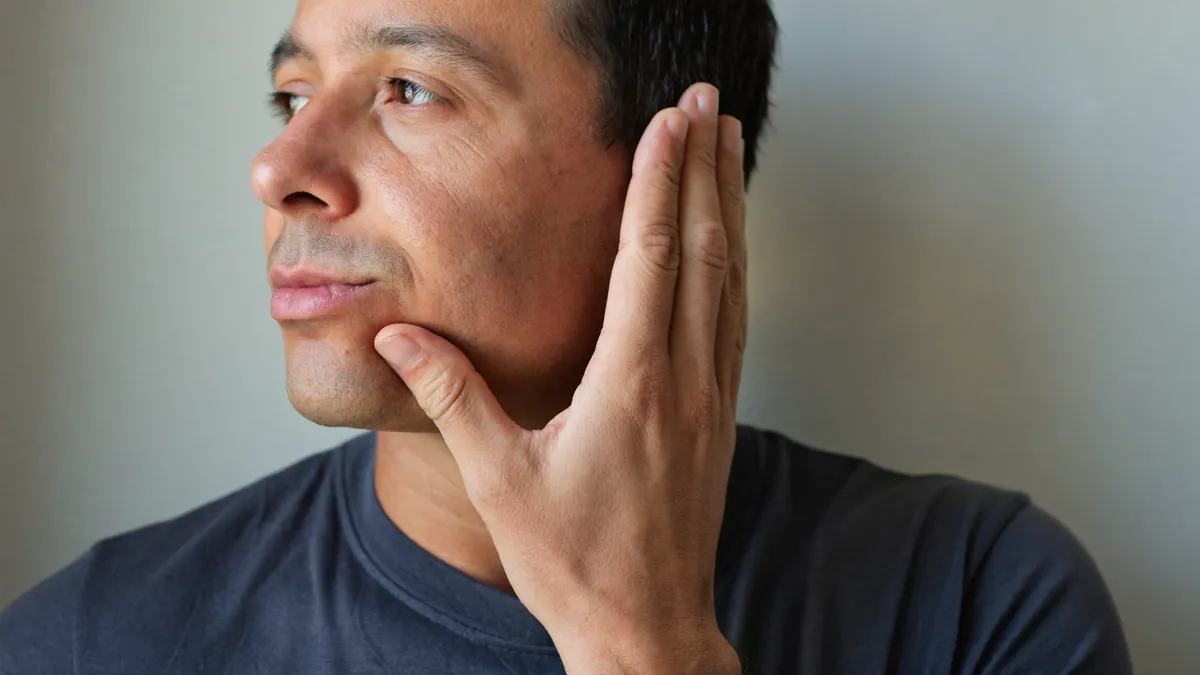
The jaw and the upper neck work closely together. Clenching or grinding keeps the jaw and temple muscles busy, and some people notice headaches around the temples with jaw soreness, clicking or a tired jaw in the morning.
When that is part of the picture, your physiotherapist will include the jaw in the assessment and, where appropriate, in the plan. Read more about TMJ physiotherapy in Edmonton if jaw pain is one of your symptoms.
Physio, massage or chiropractic for headaches
Should you see a physio or a chiropractor for headaches in Edmonton? Both are regulated professions in Alberta, and both can assess and manage headaches that are linked to the neck. Registered massage therapy is another option for muscle tension. The more useful question is what the plan includes. The OPTIMa guideline puts specific exercise and education at the centre, with manual therapy as an option alongside it.
- Physiotherapy is a sensible starting point if your headaches keep coming back, came on after an injury, or you want a plan you can carry on at home.
- Registered massage therapy can ease muscle tension in the neck, shoulders and scalp and fits well alongside an exercise plan.
- Chiropractic care is another hands-on option. Trust Care has a chiropractor in the same building, so a plan that uses more than one service does not mean travelling between clinics.
If your headaches started after a car accident, they may be related to a whiplash injury; see whiplash treatment in Edmonton for how that care is usually covered. For a broader comparison of the three services for neck and back pain, read physio, massage or chiropractic for recurring neck or back pain.
Not sure which to book first?
Book an initial physiotherapy assessment or call (825) 525-2983 and reception will help you choose
Booking in north Edmonton: referral, direct billing, hours
You do not need a physician referral to book physiotherapy in Alberta, although some extended health plans ask for one before they reimburse, so it is worth checking your policy.
Trust Care direct bills more than 40 extended health insurers where your plan allows it. Bring your policy and certificate number and the clinic will check what is available before treatment. Direct billing means less paperwork; it does not mean every visit is fully covered. Details are on the direct billing page.
The clinic is at 14415 Miller Blvd NW in north Edmonton, with parking on site, and is a short drive from Clareview, Brintnell and McConachie. Hours are Monday to Friday 9 am to 7:30 pm and Saturday 9 am to 4 pm. Directions are on the Miller location page.
Important: This article is general information only. It is not medical advice and it cannot be used to diagnose or treat any condition. Every patient is assessed first by one of our registered physiotherapists, our chiropractor or our registered massage therapists before any treatment, and your care plan is based on that assessment. If you have symptoms, please book an assessment.
Book a headache-focused assessment
If your headaches seem to start in your neck and keep coming back, an assessment can show whether the neck, shoulders or jaw are involved and what a plan would look like.
Book an initial physiotherapy assessment or call (825) 525-2983. The booking form does not ask for any medical details.
Sources
- International Headache Society. ICHD-3, 11.2.1 Cervicogenic headache.
- NICE. Headaches in over 12s: diagnosis and management (CG150), recommendations (last updated June 2025).
- Cote P, et al. Non-pharmacological management of persistent headaches associated with neck pain: a clinical practice guideline from the OPTIMa collaboration. European Journal of Pain, 2019.

