
After a suspected hockey concussion, the player comes off the ice right away and sees a medical doctor or nurse practitioner as soon as possible. From there, Canada’s sport concussion guideline from Parachute sets out a six-step Return-to-Sport Strategy and a four-step Return-to-School Strategy, and a physiotherapy assessment can help with the neck, balance, eye movement and exercise tolerance along the way. Medical clearance from a doctor or nurse practitioner is still required before any contact.
This guide walks parents, players and coaches through the first 48 hours, the red flags, each step of the return, and what a concussion management assessment at our north Edmonton clinic checks.
General information only, not a diagnosis. Our physiotherapists, chiropractor and massage therapists assess every patient first.
Concussion this hockey season?
Concussion in winter sport: what to do in the first 24 to 48 hours
Minor hockey season in north Edmonton means early practices, weekend tournaments and a lot of time on community rinks. Falls, collisions and hits are part of the game, and so is the occasional concussion.
Parachute’s Canadian Guideline on Concussion in Sport (2nd edition, 2024) says a concussion should be suspected when an athlete takes an impact to the head, face, neck or body and then shows any sign of concussion or reports any symptom. That includes cases where nobody saw the hit. In every case of suspected concussion, the guideline says the athlete should be removed from play immediately and have a medical assessment as soon as possible.
A few practical points for the first day or two:
- No return to the same game or practice. If a concussion is suspected, the player is done for the day.
- Watch for delayed symptoms. Parachute notes that a player removed for caution with no signs should still be monitored for up to 48 hours.
- Relative rest, not a dark room. Step 1 of both strategies is typical activities at home, such as light walking, meals and time with family, for a maximum of 24 to 48 hours, with screen time kept to a minimum.
- See a doctor or nurse practitioner. Only they can diagnose a concussion and, later, provide medical clearance.
Red flags that need emergency care
Some signs point to a more serious head or neck injury. Parachute lists loss of consciousness, convulsions, worsening headache, repeated vomiting and neck pain among them, with the full list in the Concussion Recognition Tool 6. If any red flag is present, call 911, follow first aid principles and do not move a player who may have a neck injury.
Our concussion management page also lists signs that mean go to an emergency department: repeated vomiting, a worsening headache, a seizure, weakness or numbness, slurred speech, unusual drowsiness, or confusion that is getting worse. Concussion rehabilitation starts only after urgent causes have been ruled out.
Why rest is short and activity is graded
Advice has changed. Long stretches of complete rest are no longer recommended. Parachute’s strategies move from relative rest to light activity after a maximum of 24 to 48 hours, and they accept a small rise in symptoms with activity as long as it is:
- mild: symptoms go up by only one or two points on a zero-to-10 scale, and
- brief: symptoms settle back to the pre-activity level within an hour.
If symptoms rise more than that, the athlete stops and tries again the next day at the same step. The guideline also notes that most athletes return to full school and full sport within four weeks, while roughly 15 to 30 per cent have symptoms that last longer and may benefit from interdisciplinary concussion care.
The six-step Return-to-Sport Strategy and the Return-to-School Strategy
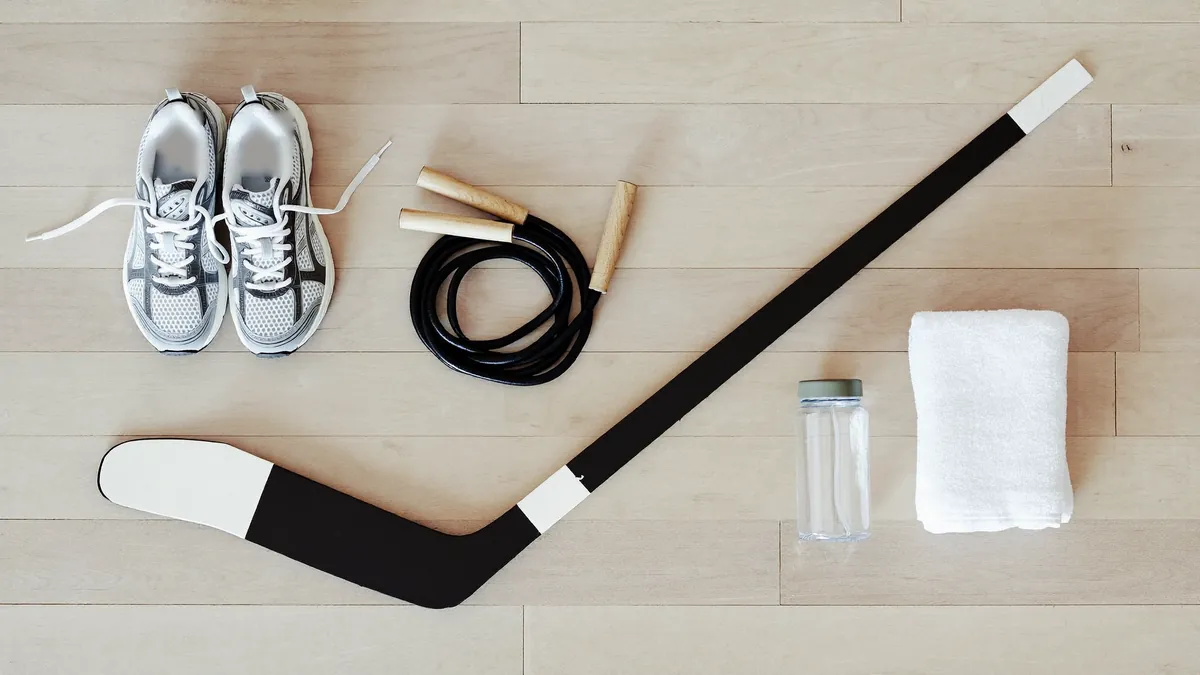
What are the return-to-sport steps after a hockey concussion in Alberta? Parachute’s strategy has six steps. The athlete spends at least 24 hours at each step.
- Activities of daily living and relative rest (first 24 to 48 hours). Typical activities at home that cause no more than mild and brief symptoms, with less screen time.
- Light, then moderate, aerobic exercise. Step 2A is light effort, such as stationary cycling or slow walking, up to about 55 per cent of maximum heart rate. Step 2B builds to brisk walking or cycling at up to about 70 per cent.
- Individual sport-specific activities with no risk of head impact. For hockey, that might be skating drills or stickhandling on their own, supervised by a parent, teacher or coach.
- Non-contact training drills and activities, at higher intensity, including passing drills and team practices without body contact. This step needs medical clearance first.
- Return to all non-competitive activities, full-contact practice and physical education. No games yet.
- Return to sport. Unrestricted play.
The Return-to-School Strategy starts at the same time and shares the same first step:
- Activities of daily living and relative rest for the first 24 to 48 hours.
- School activities such as homework and reading, at home or at school, with breaks as needed.
- Part-time or full days at school with accommodations, which are reduced over time.
- Return to school full-time, without concussion-related accommodations.
Students do not need to have zero symptoms to go back to school, and Parachute does not recommend more than one week away from school completely. Physical education follows the Return-to-Sport Strategy, not the school one.
What a physiotherapy concussion assessment checks: neck, balance, eyes, exertion
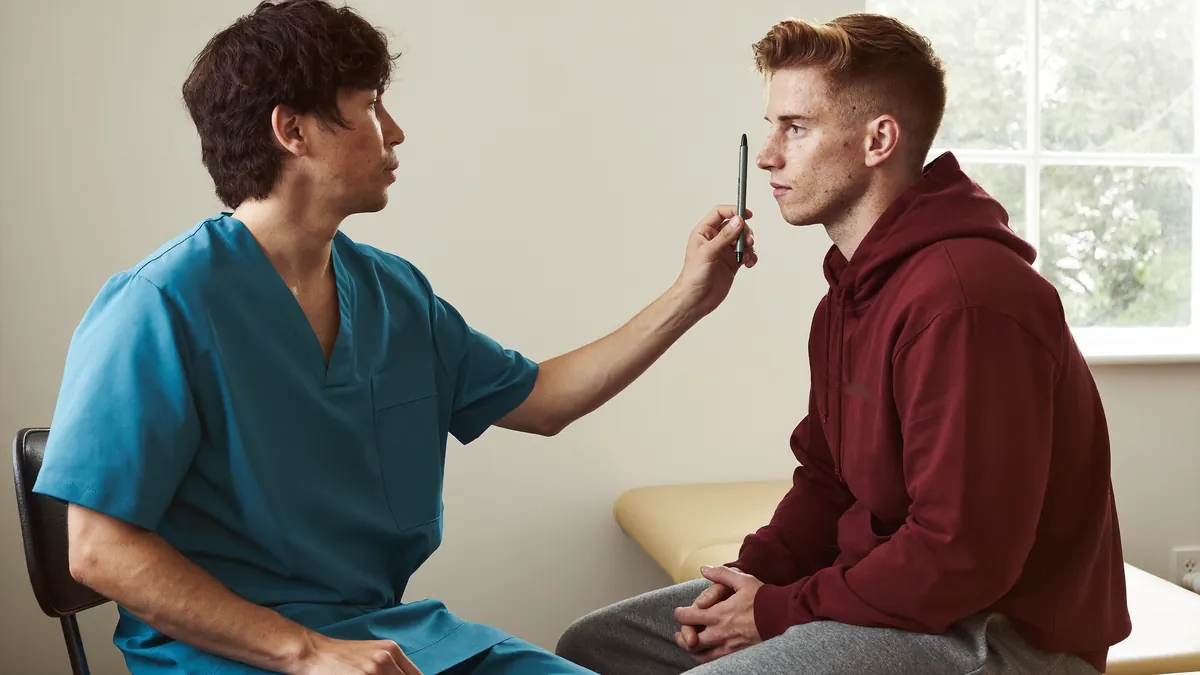
Does physiotherapy help after a concussion? Physiotherapy works alongside the medical care your doctor or nurse practitioner provides. Parachute encourages athletes to work with a licensed healthcare professional to progress through their return-to-sport steps, and that is where a physiotherapist fits.
The same hit that causes a concussion often strains the neck, and neck or balance problems can produce headache and dizziness that look like ongoing concussion symptoms. A concussion assessment at Trust Care includes:
- The neck. Movement, tenderness and whether neck positions bring on headache.
- Balance and the vestibular system. How the inner ear and balance systems are coping, especially if there is dizziness. See vestibular rehabilitation and our article on dizziness and vertigo physiotherapy for more on that side of care.
- Exertion. How symptoms respond to graded exercise, so steps 2 and 3 can be set at the right level.
Where dizziness or visual symptoms are part of the picture, the balance assessment can also look at eye movements: following a target, shifting focus, and keeping the eyes steady while the head moves.
From there, your physiotherapist builds a plan around your symptoms and adjusts it as they change, then plans the return to school, work or sport.
Working through the return-to-sport steps?
Medical clearance before contact
Before moving to step 4, Parachute requires two things:
- the athlete has completed all steps of the Return-to-School Strategy, if it applies, and
- the athlete gives their coach a Medical Clearance Letter from a medical doctor or nurse practitioner who has personally evaluated them.
A physiotherapist cannot provide that clearance. If concussion symptoms come back during steps 4 to 6, the athlete returns to step 3 until symptoms have fully resolved, and medical clearance is needed again before step 4.
Parents and coaches: what to track
Parents and coaches are often the first to notice that something is off. A simple daily record helps the player, the doctor and the physiotherapist:
- a daily symptom score on the zero-to-10 scale, before and after activity
- which step the player is on and the date they started it
- how school is going, including any accommodations
- sleep, mood and irritability, which can change after a concussion
- the date of the Medical Clearance Letter, and who has a copy
Make sure the coach and any team trainer know which step the player is on, so nobody is pushed ahead before they are ready.
Booking in north Edmonton
Where can my teen get concussion physiotherapy in north Edmonton? Trust Care Physiotherapy at 14415 Miller Blvd NW provides concussion assessment and graded return-to-activity management for concussions from sport, work and car accidents, a short drive from Clareview and Brintnell. If you are booking for a child or teen, call the clinic first to talk through the appointment.
- No physician referral is needed to book physiotherapy in Alberta, though some insurance plans ask for one before they reimburse.
- Trust Care direct bills more than 40 extended health insurers where your plan allows it, as well as WCB Alberta for workplace injuries and Section B for motor vehicle accidents. See direct billing.
- Hours are Monday to Friday 9 am to 7:30 pm and Saturday 9 am to 4 pm, with parking on site.
For other hockey injuries, such as sprains and strains, see sports injury physiotherapy.
Important: This article is general information only. It is not medical advice and it cannot be used to diagnose or treat any condition. Every patient is assessed first by one of our registered physiotherapists, our chiropractor or our registered massage therapists before any treatment, and your care plan is based on that assessment. If you have symptoms, please book an assessment.
Book a concussion assessment
If a player in your family is working through a concussion this season, an assessment of the neck, balance, eyes and exercise tolerance can help set each step at the right level.
Book an initial assessment or call (825) 525-2983. The booking form does not ask for any medical details.
Sources
- Parachute. Canadian Guideline on Concussion in Sport, 2nd edition (2024), including Table 1 (Return-to-School Strategy) and Table 2 (Return-to-Sport Strategy).
- Parachute. Canadian Guideline on Concussion in Sport, resource page.

