Common Causes of Lower Back Pain | Trust Care Physiotherapy Edmonton
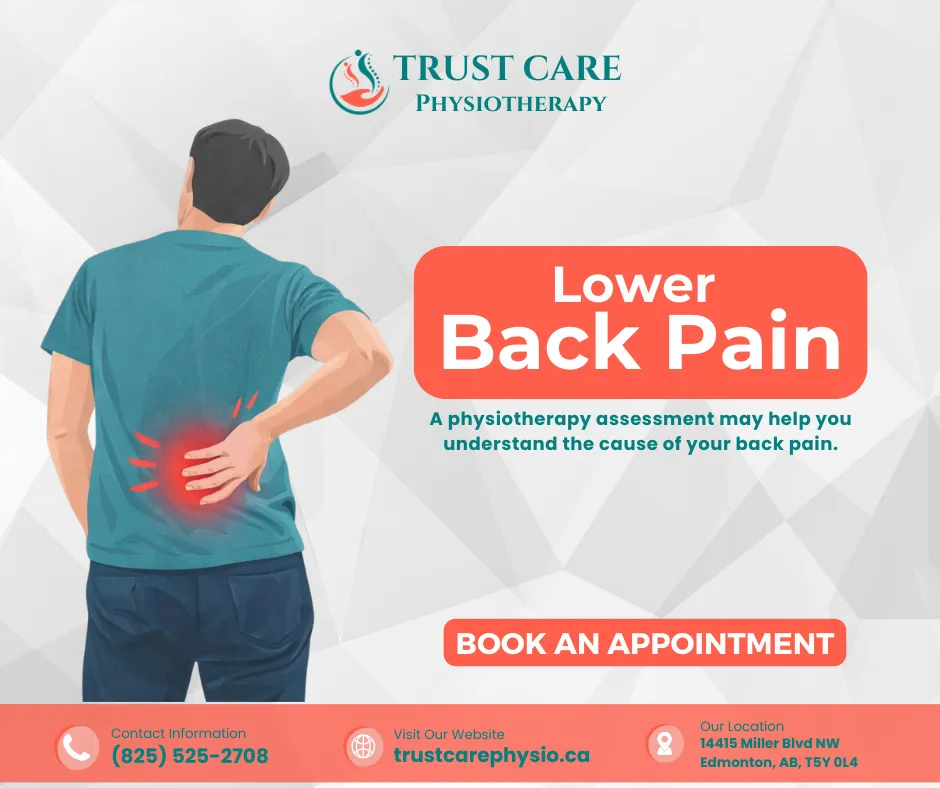
Lower back pain is one of the most frequent reasons individuals seek professional care at our Edmonton clinic. It affects people of all ages and lifestyles, often developing from routine activities such as prolonged sitting, heavy lifting, or repetitive movements.
While some assume that back pain only follows a major injury, many cases of discomfort develop gradually. Lifestyle habits, postural strain, and muscle imbalances often play a significant role in how the spine handles daily stress. Understanding these contributing factors is the first step toward effective management and returning to the activities you love.
Why Lower Back Pain is So Common
Your lower back (the lumbar spine) supports the majority of your body weight and facilitates almost every movement, from walking to bending. Because of this high demand, the muscles, joints, ligaments, and discs in this area can become irritated or strained over time.
Symptoms can range from a dull ache after a long day at the office to sharp discomfort during specific movements. Whether it’s stiffness when waking up or a recurring ache during physical activity, identifying the root cause is essential.
Common Contributing Factors to Back Discomfort
1. Prolonged Sitting and Sedentary Habits
With many Edmontonians working in office environments or spending long hours commuting, sitting has become a primary driver of back tension. Sitting for extended periods can increase pressure on the lumbar discs and lead to muscle tightness. Implementing office posture tips and taking regular movement breaks can help mitigate these effects.
2. Muscle and Ligament Strain
Sudden movements, lifting heavy objects incorrectly, or repetitive bending can lead to small tears or irritation in the soft tissues of the back. This often results in localized soreness and a limited range of motion.
3. Weakness in the Core and Stabilizing Muscles
The muscles in your abdomen, hips, and back work together to stabilize the spine. When these muscles are underconditioned, the spine lacks the necessary support, forcing other structures to overcompensate. This is often addressed through personalized exercise programs in Physiotherapy.
4. Workplace and Accident Injuries
Sometimes, back pain is the result of a specific incident. At Trust Care, we frequently assist patients navigating recovery through Workers' Compensation Board (WCB) claims or those recovering from a Motor Vehicle Accident (MVA).
5. Disc and Joint Irritation
As we age, or following repeated strain, the discs between the spinal bones may become irritated. This can lead to localized stiffness or, in some cases, pain that radiates into the hips or legs.
The Role of Physiotherapy in Recovery
If back pain persists for more than a few days or keeps returning, a professional assessment is recommended. Our Physiotherapists evaluate your movement patterns, posture, and strength to identify the factors contributing to your discomfort.
Depending on your specific needs, a treatment plan may include:
Manual Therapy: Hands-on techniques to improve joint and tissue mobility.
Exercise Prescription: Targeted movements to improve strength and flexibility.
Complementary Care: Many patients find relief by combining physio with Massage Therapy or Acupuncture.
Education: Strategies to adjust your daily habits and prevent future strain.
Simple Tips to Protect Your Spine
Move Regularly: Avoid staying in any single position for more than 30 minutes.
Lift with Your Legs: Keep heavy items close to your body and bend at the knees.
Stay Active: General physical activity helps keep the spinal structures resilient.
Check Your Setup: Ensure your workstation is ergonomically sound.
Personalized Back Care in Edmonton
At Trust Care Physiotherapy, we focus on providing evidence-based care tailored to your unique situation. Our goal is to help you improve function and reduce the impact of back pain on your daily life.
If you are experiencing ongoing lower back discomfort, our team is here to help you understand your options and develop a path forward.
Ready to start your recovery?
Book Online: Trust Care Jane App
Call Us: +1 (825) 525-2708
Learn More: About Our Team
Location: Contact & Directions
